When not writing for FGUK, Tim works as a Physiotherapist, Personal Trainer and is a Retired British Army Ammunition Technician.
In his spare time Tim enjoys engaging in a whole variety of sports, spending considerable time with his little rascal of a dog, relaxing with his friends and family, but most of all.. geeking out on all things fitness!
EmailXInstagramLinkedIn
Ok, most of us aren’t Kirk Karwoski, Ed Coan or the Kazman himself. We like to lift more than the general population, but we certainly aren’t in the top 5%! Here’s when this relatively cheap, robust, near immortal barbell really comes into its own. Sit down, pin your ears (or eyes) back and take heed of this review 🙂
It was June 2015. My funds were near depleted. I’d just graduated from Physio school, secured rent on a room with a 12×12 foot piece of concrete outside and was feeling ready to conquer the life! The world was my oyster. What was my priority you ask?
Buying a squat rack, barbell and some bad ass weight plates, as I could now invest all my spare time into getting jacked n’ tanned. I told myself, ‘surely the more weight I can lift, the more the job opportunities and girls will come flocking to my feet’. I figured this was a bullet proof way of securing my place at the top of the social hierarchy.
I managed to scrape together just enough funds to grab a brand new squat rack on hire purchase. The weight plates? I grabbed them cheap from a local gym that was closing down. The barbell though…
I researched. Seconds, hours, days went by. ‘Should I go all in? An Eleiko, Ivanko, or perhaps a Leoko bar?! Or maybe even, a rare as hen’s teeth, Werksan barbell? All the pro’s use them, so maybe that was the secret to god like gains?!’ These bars showcased such engineering prowess over their cheaper – mass produced rolled steel counterparts. Holding tensile strengths up to 10million tonnes (well, in my head anyway!) – they were second to none!
Reality soon kicked in. There was no amount of getting a loan to cover the cost of one of these epic strength building bad boys.
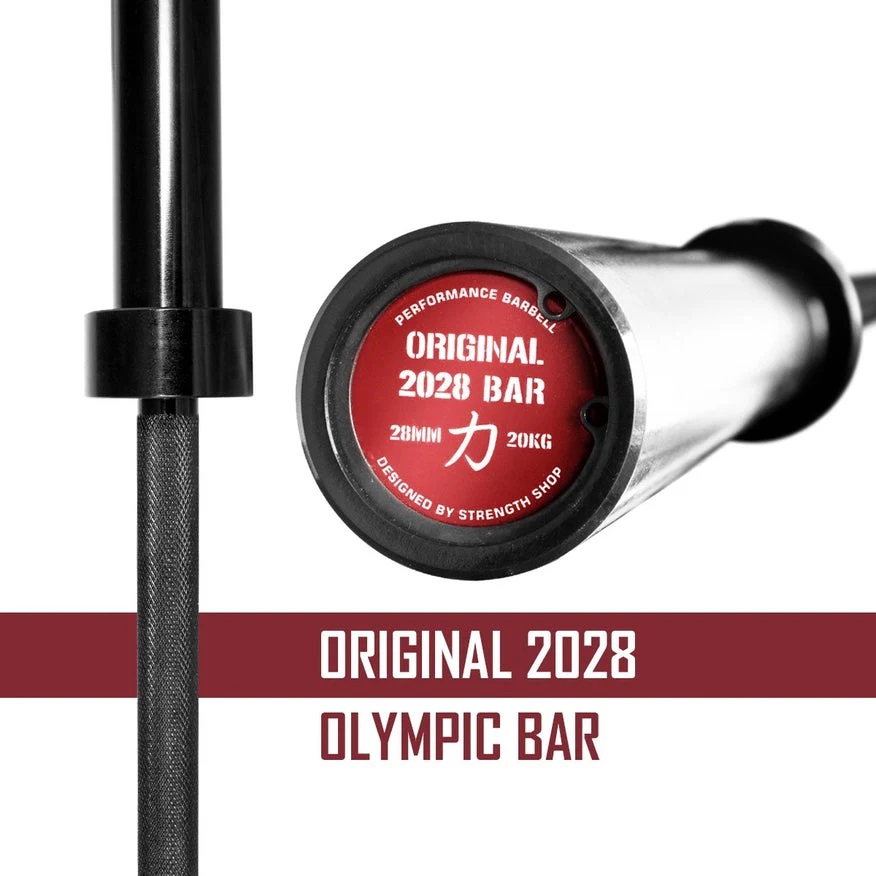
Here’s where I took a punt. The Strength Shop 2028 bar! The specs were far less than any of the previously mentioned. It sold for nearly a whole fifteenth less than the world renowned bars.
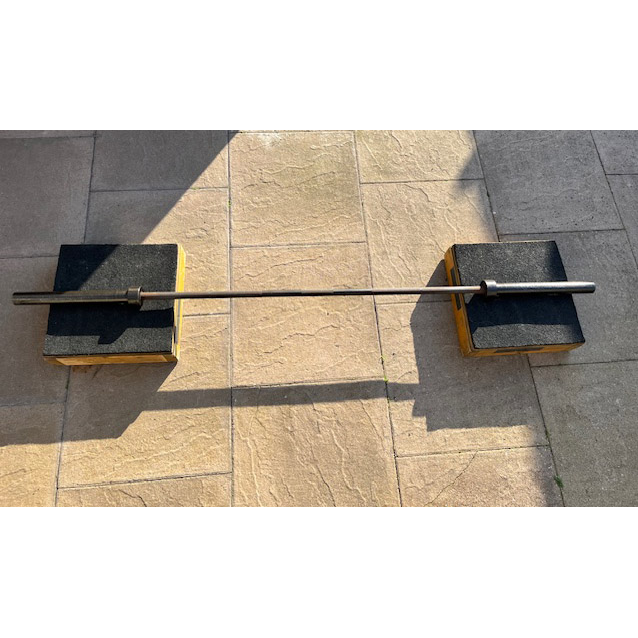
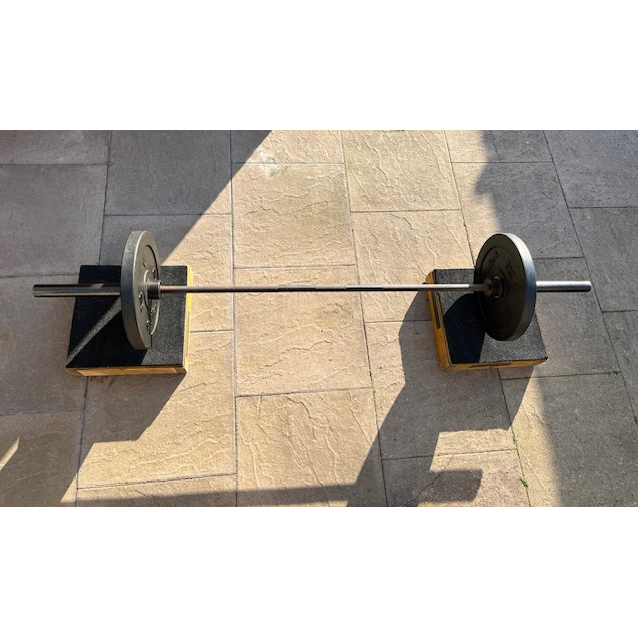
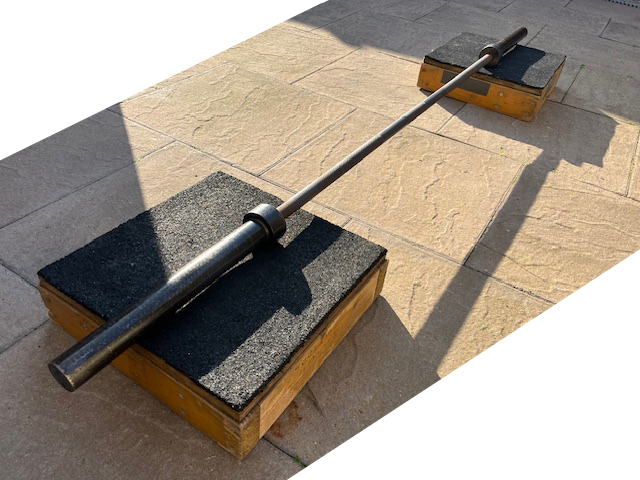
But fast forward 11 years and this bar is still going strong. It’s a bit rusty here and there, but the sleeves still spin freely and there’s no bend to the bar whatsoever. All it’s had is the odd wire brush scrub and the occasional dab of light weapons oil over it and it’s stills serving its purpose with pride, strength and humility.
Delivery/Condition on Arrival
I remember the day well! The DPD delivery driver quietly cursed me underneath their breath as they had to carry the secure cardboard tube that housed the barbell about 40 metres to my door.
The cardboard tube was strong and heavily taped up.
Some handy slicing with a blunt Stanley knife opened it up, and there inside lay perfection! It was solid, with no chips, bends or random easter eggs laying inside. It arrived as if it had just come off the production line.
5/5
Technical Specifications
Weight: 20kg Length: 2.2m Shaft: Steel Shaft diameter: 28mm Distance between rings: 810mm Loadable sleeve length: 405mm Centre knurling: Yes Knurling type: Coarse Sleeve type: Steel Bushings and needle bearings Recommended max load/rating: 250kg max suggested load, with a 700lbs steel tensile rating (PSI: 186K) Warranty: 6 months
Build Quality
The sleeves run smooth, the knurling doesn’t rip your hands apart but it is sharp and coarse enough to help with your grip. Our bar has handled up to advertised 250kg (and more) without permanently bending. The black oxide finish looks very cool, and is still in place to this day.
There’s not much about the build quality on Strength Shop’s official website, so you’ll have to go off our anecdotal experience here.
5/5
Ergonomic Rating
The knurling on our bar is equal and suits well for supporting the bar on the back during those heavy squats. This obviously has the centre knurling found on most powerlifting spec’d bars. The weight of the bar itself is even, sitting straight on the back unloaded.
The 2028 refers to the width of the shaft itself, sitting at 28mm. This means that it’s good for deadlifts as well as squats and bench presses.
Most gym bars sit around the 30 or 32mm mark, making it slightly more challenging to grip for deadlifts. Although this can be viewed as positive as it will improve your grip strength, there’s many other exercises that you can do to gain a vice like grip. Consider something like the Mirafit Rolling Handle.
5/5
Adaptability
It’s a barbell. It doesn’t need to be adaptable. If you’d like adaptability, then perhaps consider something like a decent safety squat bar (of which we will be reviewing in the near future).
Whilst on the topic of adaptability, although this is considered a multi-purpose barbell, I’d personally steer clear from dropping this like a weightlifting bar though as this doesn’t have the flex and impact resistance of said weightlifting bars. I suspect they would be permanent malformation occurring when dropping the heavier weights from height.
0/5
WOW Factor
Hmm, meh. How could a barbell have the WOW factor?
I guess it could have some cool logo on the end sleeves, multi coloured main shaft, or perhaps diamond encrusted knurling? Or I guess it could carry with it bragging rights of brand name itself, like Elieko, Werksan, Leoko, Ivanko etc.
0/5
*This barbell however doesn’t need the WOW factor to be good at its job!
Longevity
Ten years and it’s still as good as it was the day it slid out of the tube!
5/5
Price
Ten years ago, it was pretty much unheard of to grab a barbell capable of handling up to 250kg for anything below £350. I remember this was around £99 on sale at time of purchase, with free delivery and it’s currently sitting at £129.99 with free delivery to mainland UK.
For a bar that’s lasted ten years of use and abuse, with the odd smattering of oil and wire brush scrubbing for maintenance, that’s a bargain!
5/5
Summary
Total rating: 3.57/5
Should you:
Avoid
Consider
Shortlist
Buy it NOW!
The total rating is not truly reflective of the high quality of this cheap barbell. To clarify, FGUK will not get any commission for any sales of this barbell. Bearing this in mind, we still highly reccomend that if you’re low on funds and in the market for a decent barbell that can handle all the major power and gym lifts, this is the one for you.
When not writing for FGUK, Tim works as a Physiotherapist, Personal Trainer and is a Retired British Army Ammunition Technician.
In his spare time Tim enjoys engaging in a whole variety of sports, spending considerable time with his little rascal of a dog, relaxing with his friends and family, but most of all.. geeking out on all things fitness!
Support FGUK
It’s time to pay the bills and send the shameless plugs!
If you would like to help fund the ongoing running costs of the site, then you can!
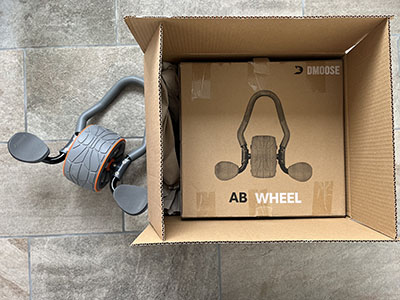
This came shipped from Amazon, so expect super-fast, undamaged, reliable delivery.
5/5.
Technical Specifications
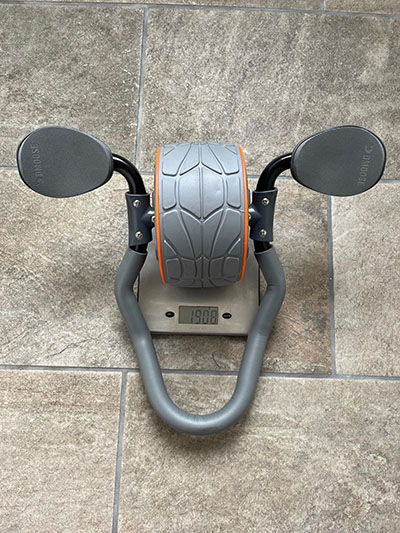
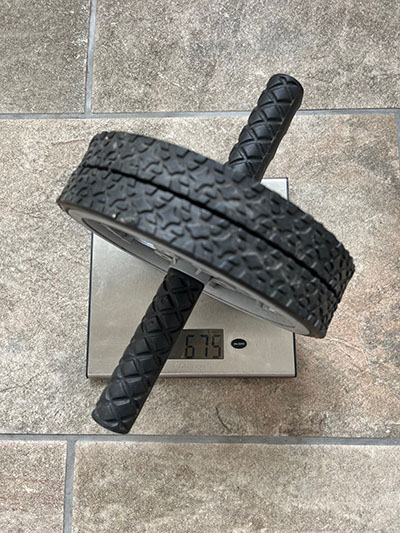
Weight: This is advertised as 1.8kg. It came in just a bit higher than that on our Salter scales: 1.9kg/1908grams (in comparison a normal straight bar roller weighs around 675grams on average).
Weight Capacity: It’s rated to supporting up to 150kg or 330lbs.
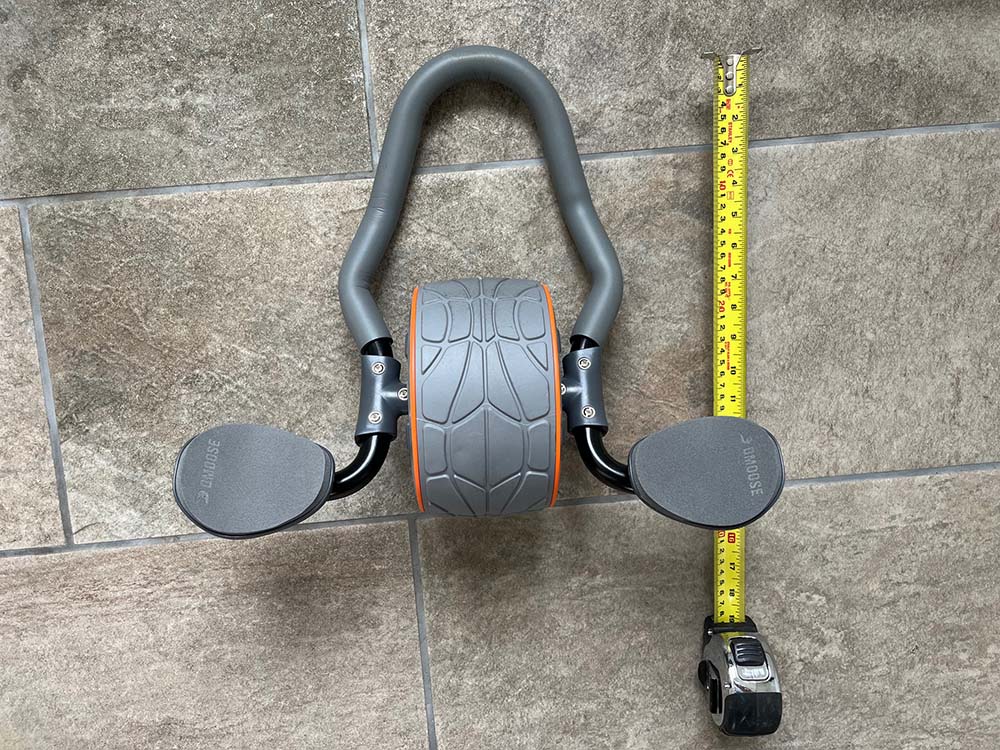
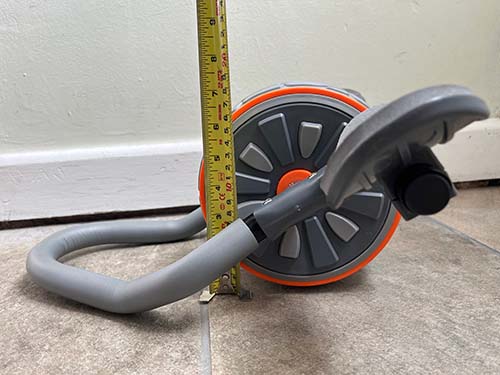
Dimensions: Total Height: 18cm/7inches Total Width: 41cm/16inches Total Length: 37cm/14.5inches Wheels (Width 10cm/4”, Depth 7″/17.8cm)
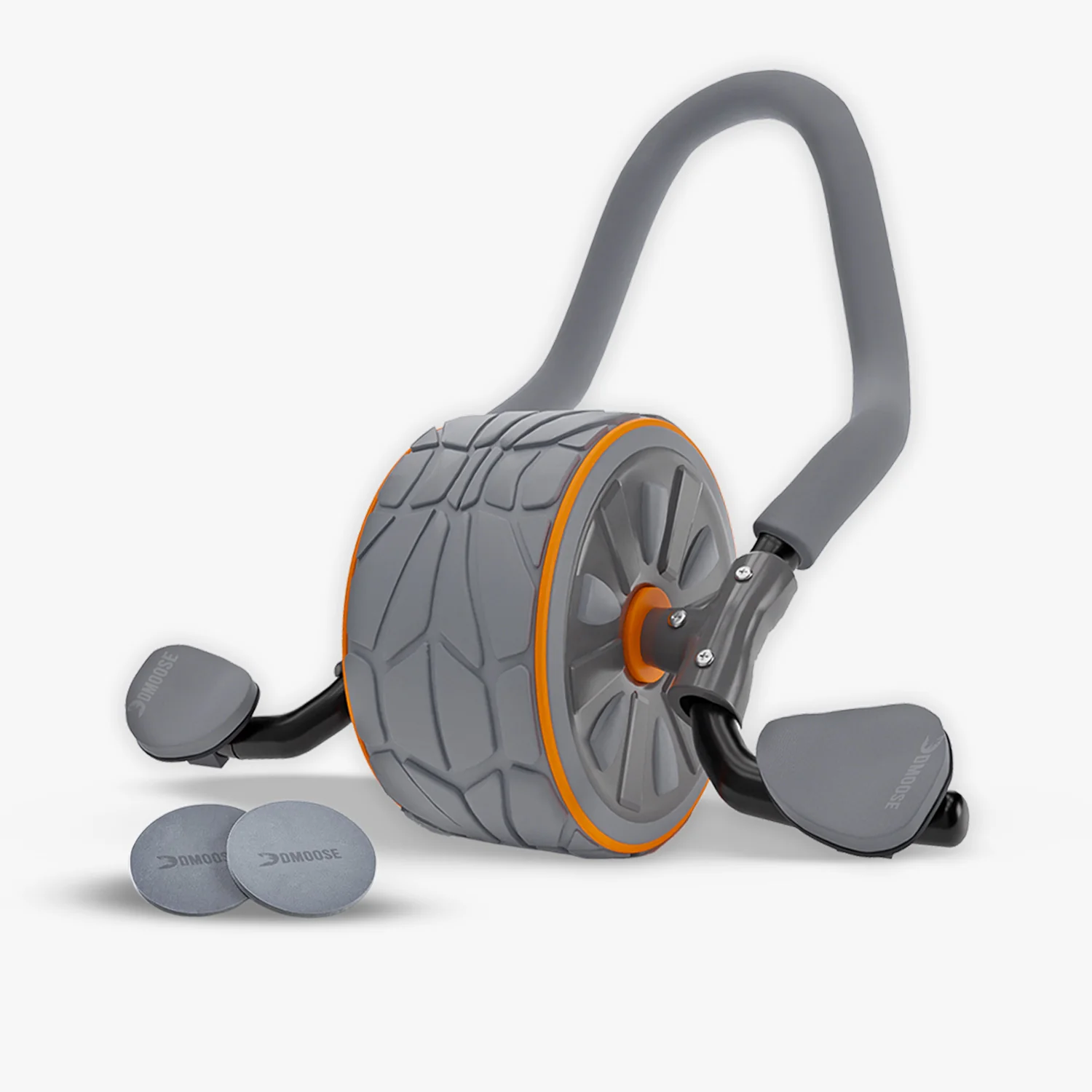
Build Material/s: There’s rubber coating on the steel tire. The stainless steel handles are coated with a soft cushion-like material. Padded supports also provide a nice surface for the elbows to rest on.
Build Quality
This is like the Landrover Defender of ab wheels, i.e. it’s a sturdy bit of kit! The wheel itself is very thick – measuring in at 4inch in width. This provides plenty of stability. The plastic is tough enough to be used outdoors on concrete. The roll of the wheel is just as buttery smooth outdoors as it is on smooth carpet indoors.
There’s absolutely no wiggle or wobble rolling out, or back in again.
The plastic end caps did fall out of mine, but that made no difference to the overall comfort, fluidity of effectiveness of the wheel.
The wheel also comes with some circular pads, which to this day I have no idea what these are meant for. Please comment below and let me know if I’m being a bit special!
5/5
**Edit – it turns out I was being a bit slow here… The pads are supports for the knees! And side note – these are perfect for supporting the knees for any knee supported hamstring stretching when you’re on hard surfaces.
Ergonomic Rating
I can honestly say, this is the best ab roller that I’ve ever used. Due to the unique design of the handles and elbow supports there felt much less stress on my wrists.
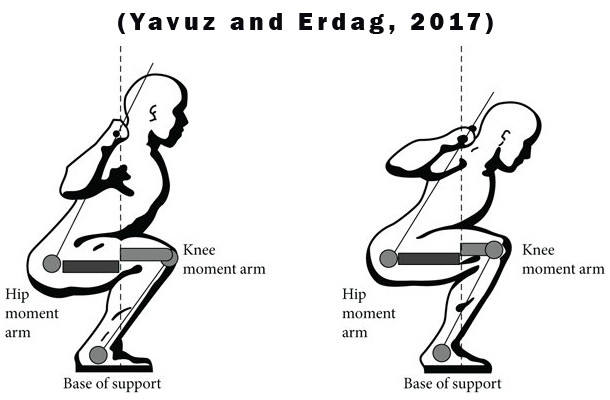
With generic ab rollers, I find that my hip flexors can be too dominant (this most likely due to my body being battered from years of abuse). I didn’t have that issue with this one though. I think that’s mostly due to the different moment arms, resulting from the resting elbow position. I could attempt to go into the biomechanics of this but this isn’t the time or the place. Google it 🙂
I started with the kneeling roll outs, progressing to raised knee roll outs within 4 weeks. The Ab DOMs were very real with this – both upper AND lower!
Overall, I think this is a very good bit of kit for beginners, experts or those like myself who’s bodies feel like a bag of broken nails getting sledgehammered into oblivion in an attempt to fuse them back together.
5/5
Adaptability
So, this isn’t very adaptable per se. But then it doesn’t exactly need to be the Optimus Prime of all gym equipment! It does however allow you to adapt your level of strength and control more so than a bog standard two handle straight bar roller. This is due to the aforementioned optimised levers/moment arms. Simply put.. you can perform this exercise on your knees or in a plank type starting position with your knees elevated if you have a super strong core. The reduced stress on the wrists is also very much welcomed when using this daily.
And don’t worry if you’re a bit more of a girth machine than the average mortal… It’s got a weight capacity of up to 150kg/23.6stone.
3/5
WOW Factor
Hmm. I don’t know what else to say other than… Yep, this definitely has the WOW factor.
5/5
Longevity
I’ve given this as much of a run as I felt it needed to test a moderate degree of longevity. This being one month! I have given it a run for its money though, being fairly careless when handling it. Throwing it in and out of the car, on and off the floor and as mentioned previously, trying it out on concrete and gravelled roads.
5/5 – though caveated with the limitations that one month’s testing undoubtedly poses.
Price
DMoose’s ab roller is available for £89.99 currently on Amazon.
I feel the cost of this is a bit on the high side if you compare it to other, more adaptable pieces of gym kit like suspension trainers that allow you to train pretty much every body part effectively. Take for example the TRX GO Suspension Trainer System, which is currently only £119.95 from Amazon at time of writing.
DMoose’s ab roller is however a very sturdy, robust ab roller (perhaps the sturdiest one on the market currently). If you’ve got the cash and are willing to splash, then you won’t go wrong grabbing this one.
3/5
Summary
To summarise… well, it’s an ab roller. It ain’t gonna change the world, fire you off in a rocket to space, or empower you with god like strength and eternal life.
It is however, a bloody good ab roller. IMO, the best that money can buy at the moment. And really, what else could you want from an ab roller??
In the words of MKBHD’s own Marcus Brownlee… reviews don’t bankrupt companies – products do. Good products make companies, bad products break companies.
Although this is on the pricier side of the equation, this is a very good product which achieves exactly what it says on the tin, in a very comfortable effective manner. Good job DMoose!
When not writing for FGUK, Tim works as a Physiotherapist, Personal Trainer and is a Retired British Army Ammunition Technician.
In his spare time Tim enjoys engaging in a whole variety of sports, spending considerable time with his little rascal of a dog, relaxing with his friends and family, but most of all.. geeking out on all things fitness!
Support FGUK
It’s time to pay the bills and send the shameless plugs!
If you would like to help fund the ongoing running costs of the site, then you can!
Accept That You’re Injured – A Brief Physiotherapists Perspective
If you’re struggling with acute, sub-acute or chronic injuries that are knocking you off form, then I would suggest checking out these 5 tips to recovery to start with 🙂
After that, read and ruminate on the information below, then try and work towards accepting your limitations.
Acceptance
Accepting that you’re not on top form all year round is incredibly challenging for even the most elite of athletes. If one does not accept this fact of life, it can (and quite often does) have a deleterious effect on an athlete’s performance and life outside of the gym.
*Disclaimer*
If you have the genetics of the Greek God of Thunder, Zeus himself, then disregard everything I’m about to say.
You can probably also disregard the below if you’re living in a perpetual state of misery due to year round calorie deficit, training twice a day/seven days a week and consuming copious amounts of Uncle Joe’s Cough Syrup to the point where your every orifice and pore is sliced and diced.
*Disclaimer*
If you’re a normal bod like myself, try not to worry about putting on a few pounds, having your VO2 max drop or your 1RM squat sinking to the deepest depths of the ocean. If you have put in gym work long term, you will get back to being a gym master once you address your injuries.
If you haven’t put in the long term work, also try not to worry! If you address your injuries and limitations at the start of your training life, then you will be in a much better place to progress because you will be building a solid base that won’t be knocked down so easily in years to come.
Accept that you may have to drop the intensity, volume or completely change up the type of exercise you need to perform in order to recover. But remember, this will (in the majority of cases) be temporary. Temporary could be one week, one month or even one year. If you focus on the above, you will recover and eventually be in a better, stronger, more mobile position than before to get back on the gain train.
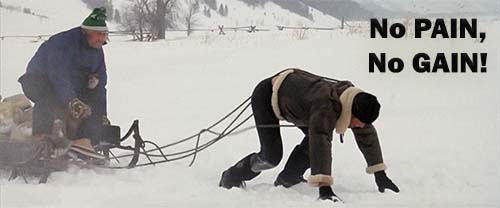
(Rocky IV, 1985)
That old school mindset of Mickey, Rocky’s tough as old boots trainer, is outdated, risky, based on survival of the fittest and has huge attrition rates due to injuries. Gritting your teeth, pushing through the pain and thinking you’re entire being is composed of adamantium is a fast track route to never being on top physical form.
Now don’t get me wrong, there are times where the ‘no pain, no gain’ attitude will help to build strength and fitness – however the key thing to question here is the severity, intensity and nature of the pain (Google ‘SIN Factor’).
If the pain is merely delayed onset muscle soreness (DOMS) that settles in a few days… happy days! If the pain is something that just seems to persist despite all your efforts to fix it, you need to address the issue.
‘Pushing through’ will likely just exacerbate things, cause a whole heap of compensatory mechanisms long term and there’s a high probability that it will compromise your ability to ever fix the true source of the problem. If you want examples of what ‘pushing through pain’ does to those mere mortals amongst us, just check out some of the hundreds, if not thousands, of men and women who were subjected to the Bulgarian Method of Weightlifting back in the 80’s.
On that happy thought… until next time, signing out 🙂
When not writing for FGUK, Tim works as a Physiotherapist, Personal Trainer and is a Retired British Army Ammunition Technician.
In his spare time Tim enjoys engaging in a whole variety of sports, spending considerable time with his little rascal of a dog, relaxing with his friends and family, but most of all.. geeking out on all things fitness!
Support FGUK
It’s time to pay the bills and send the shameless plugs!
If you would like to help fund the ongoing running costs of the site, then you can!
Standby for an absolute knowledge bomb which will rock your world forever! Ok, perhaps that’s going a tad overboard 😉
In this article we’re going to delve into the psychology of adherence. Why are some people so motivated to consistently go to the gym, yet others find themselves having to battle against using every excuse under the sun to avoid pumping that iron?
To really understand this, we need to dive into a hugely misunderstood (and often bastardised) concept known as change theory.
—
Imagine this scenario… 90 year old Doris is riddled with OA, with a history of stroke, multiple M.I’s, severe de-conditioning following 25 years of physical inactivity and most recently, 18 months of bed rest post hip fracture following a fall at home. Doris’s family have suddenly had a bill through for the increased care that their beloved matriarch now requires due to their severely immobility.
What do they do? They immediately get on the blower to the GP, who without much thought, says those words that send utter dread through even the most hardy of physio’s: ‘okey dokey, don’t worry.. we’ll just get some physio in to fix her and get her back on her feet’.
Cue the start of the nightmare that is dealing with unrealistic expectations that have been implanted by the lazy, lacklustre, slopey shouldered use of the English language in an attempt to quickly mag to grid (get rid) of the family and move onto the next.
Whoa, ok… maybe that’s a bit harsh. Let me get back on track 🙂
Now Doris hasn’t got the slightest interest in engaging with physio. After all, she feels like she’s 90 years old, with a long history of a variety of severe co-morbidities that have severely impacted her life. Doris is happy enough doing her crosswords, knitting, watching repeats of Homes Under the Hammer, chatting with friends and occassionally getting outside in her wheelchair to enjoy the sights, sounds and smells of mother nature. Herein lies the problem…
Doris isn’t the one who’s had the initial thought of ‘oh, I have a problem – maybe I need to change something here’. This tends to be the target indicator of whether or not a person is likely to engage, thus be prepared to make changes to their current lifestyle in order to achieve a self set goal.
You can find a myriad of change theories on Google, lots of which do indeed hold merit (especially when it comes to organisational change). The theory that I like to use with my patient’s however is quite an old one that was initially proposed in 1977, then built upon in 1983 by Prochaska and DiClemente, called The Transtheoretical Model (aka. the Stages of Change Model). This focuses more on peoples health behaviour changes, with it being just as relevant today as it was 40 years ago.
See this great illustration by Social Work Tech which neatly describes the individual changes.
Using our example, 90 year old Doris is most likely in the pre-contemplation stage of change and is unlikely to be receptive to any education or advice informing them that they need to start engaging in a progressive exercise regime (be that in whatever form) if they want to see significant changes in their mobility.
Now Doris didn’t even know she was referred to the physio in the first place. She either says “on yer bike matey, don’t you know I’m 90 years old!” – or “oh, you seem like a lovely handsome young man, that sounds like a lovely idea”, when what she really means is ‘oh, wouldn’t it be nice to have a young chap to talk to every week whilst he does exercises for me’.
There is potentially a third outcome, in which Doris is actually extremely motivated to consistently engage and commit to some form of exercise regime. However in this author’s experience, that’d be like having Sandra Bullock, Jennifer Connolly and Shania Twain all asking for your hand in marriage at once. I mean, IT IS possible… but it’s highly unlikely!
Screw Doris! How does all this relate to whether I’m going to stick it at the gym?
Great question!
Now that we understand that there are certain stages to ones health behaviours, if you’re reading this then you’re likely in either the ‘maintenance or relapse’ stage of Prochaska and DiClemente’s model. You should probably accept that slipping into the relapse stage is inevitable at some point, and this really isn’t the end of the world if you realise and learn from why you relapsed. The key is to keep learning from the triggers that cause you to relapse, and try to eliminate or change said triggers. Common triggers can be things like:
Stress at work = chronic fatigue, poor diet and lack of quality sleep (aka. an unhealthy work-life balance).
Relationship breakdowns.
Sudden loss of income.
Minor or major injuries.
You may even develop some entirely new barriers to exercise such as:
Insufficient time to exercise.
Inconvenience of exercise.
Boredom with exercise.
Lack of confidence in their ability to be physically active (low self-efficacy).
Lack of encouragement, support, or companionship from family and friends.
Building resilience, working on improving your emotional intelligence and recognising your barriers can be the key to figuring out why you might be more inclined to ditch the weights, pick up the fork and put your feet up when times get tough.
If you fancy some practical tips on how to stick to your new found life of fitness, check out our original article here.
When not writing for FGUK, Tim works as a Physiotherapist, Personal Trainer and is a Retired British Army Ammunition Technician.
In his spare time Tim enjoys engaging in a whole variety of sports, spending considerable time with his little rascal of a dog, relaxing with his friends and family, but most of all.. geeking out on all things fitness!
Support FGUK
It’s time to pay the bills and send the shameless plugs!
If you would like to help fund the ongoing running costs of the site, then you can!
Are you thinking, ‘I want to find a good gym near me’?
Obviously, the first thing you should do is search our site for a gym near you!
And after that.. consider these points.
Closest Gym To Me
How far are you willing to travel? Are you looking for a 10-15 minute walk/run/drive or a 2-3 hour trip to train at a specialised gym that leads the way in their respective field of sport?
If you want to benefit from the skills, experience and atmosphere of elite athletes and their coaches, then you’ll likely be spending more time on the road as these tend to be located in the bigger cities.
On the contrary, if you’re happy with the basics like a treadmill, rower, resistance machines and some dumbbells (all of which, by the way, can be purchased for your home gym on their respective Amazon links), then they’ll likely be a gym very near you for you to train at. If you’re struggling to find any commercial gyms, then consider smaller hotel or independent gyms. Most academic organisations also tend to have the basics that are available to the public. Just select ‘Health Clubs’, ‘Independent Gyms’ or ‘Academic Gyms’ on our listings page to find one near you.
Whichever way you go, make sure you will be willing to repeat this journey multiple times a week to ensure consistency!
Type Of Gym
This is very closely linked to your goals. If you’re wanting to shed a few pounds before summer, keep them off forever or smash some extra calories out following a bit of a binge during the festive period, then a general ‘Health Clubs’ search will likely find something to fit your needs!
If you’re wanting to get into a more specific fitness type, then it may be worth your while checking out where the nearest gym that specialises in a specific area of fitness is. Luckily for you, you can achieve this via a quick search on Find Gyms UK.
Gym Opening Times
This one’s a biggy! If you need to be walking in the door at work at 07:59hrs, then a gym that opens their doors at 07:00hrs will not allow you enough time to train, shower, eat/drink and get to work (unless your work is right next door, are smashing out a short 20 minute session of high intensity training and you inhale your food down the pipe quicker than, well.. a really quick thing).
Look for one’s that open earlier (some tend to accommodate 8-4 work timings by opening at 06:00hrs), if not you should consider a 24-hour gym. Simply select our ‘24 hour gyms’ filter in the listings.
Gym Facilities
If you’re a powerlifting specialist, then you’re probably going to be disappointed with what the small, local YMCA gym offers in terms of weights. On the other hand, if you’re looking to simply find a decent rower, treadmill or sports hall, the YMCA could be great option!
If you’re interested in more sport specific equipment like specialist barbells, GHD’s, plyo boxes, Olympic bumper plates and gymnastic rings, then you may have to do some digging into exactly which pieces of gym kit a gym has. *quick plug again.. if you want to sack off the gym entirely and would love to own this equipment, you can find it all on their respective links at Amazon.
You can find the exact equipment that a gym near you has by navigating to the respective gyms’ website via their listing page. Most gyms advertise their inventory online. If you’re still struggling to find their kit, consider doing it the old fashioned way and give them a bell!
Do You Really Need a Gym?
Yes, this may sound like a strange suggesting coming from a website that promotes gyms! However, quite often people want to get fit, but no matter what they try, they just can’t commit to regularly attending a gym due to their own mental or physical barriers.
If this sounds like you, consider looking for community groups such as running groups, yoga groups, or even martial arts or rock-climbing clubs. You can find many of these ‘sport specific’ groups running out of local universities or council led facilities.
Because remember… calories don’t discriminate and they aren’t just burnt in the gym!
When not writing for FGUK, Tim works as a Physiotherapist, Personal Trainer and is a Retired British Army Ammunition Technician.
In his spare time Tim enjoys engaging in a whole variety of sports, spending considerable time with his little rascal of a dog, relaxing with his friends and family, but most of all.. geeking out on all things fitness!
Support FGUK
It’s time to pay the bills and send the shameless plugs!
If you would like to help fund the ongoing running costs of the site, then you can!
Top 5 Tips To Recover From The Gym As You Get Older.
You may be expecting to see quite colourful, bizarre suggestions here with an article title like that! The internet’s full of things like… “bathe in a steam room filled with organic Alaskan Ginseng collected from the valleys of Mount Hagen. Let it permeate through your body and enter your soul” (shout out to RDR2 fans ?). Oh, and be sure to do all of this 30 minute before sipping your first glass of chilled, purified, nutrient enriched water from the springs of Mount Kenya!
Ok, so let’s cut through the sales marketing drivel and fitness charlatan nonsense ^^ that plagues the internet and lay out our top 5 scientifically supported (and arguably most effective) tips to recover from the gym, quick time!
Rest to Recover/Rest for Injuries
If you’re suffering from pain and it’s affecting your daily activities and training, then try your best to figure out and avoid the movements that aggravate the injured or severely fatigued tissues during waking hours. If you repeatedly aggravate an injury, you are not allowing the injured tissue enough time to heal. I understand this ‘active resting’ can be very tricky if your work requires you to perform certain actions, or if you have dependents who rely on your manual handling.
If such things are the case, I’d encourage you to discuss your limitations with work. Here in the UK, employers have to provide ‘reasonable adjustments’. Now obviously, I’d suggest that you avoid milking this, however a few months of light duties may well be the key to your long-term recovery, which will benefit both you and your employer! Are kids the issue? Consider rearranging furniture in the house to accommodate for your limitations, consider purchasing aids/adaptations that make your life a little easier or reach out to friends and family for help. The Royal College of Occupational Therapists have loads of information that may help you with this.
Still struggling? Check out our last point on physiotherapy.
Sleep Hygiene
Very closely linked with rest (as this is exactly what it is), however this is when your body really recovers. Try to get at least 6 hours of quality sleep in each night. Want to get really geeky? Try using one of these health tracking smart watches to measures your sleep quality… Want to get even more geeky?
Try these sunrise alarm clocks, which help your body wake up naturally without bright blinding lights and buzzers calling all your senses to attention at once! Ok, so this could run the risk of falling into the sales marketing drivel that we referred to at the start. There is however some evidence to suggest that supporting our bodies natural circadian rhythms can help improve recovery when waking up from a deep slumber. This article found that blood pressure gradually increased before the scheduled time of awakening, and that heart rate did not show a rapid increase at arousal. In contrast, forced-awakening (i.e blinding lights and alarm noises) induced acute increases in both heart rate and blood pressure.
Oh, and all that stuff you here about limiting screen time before bed.. it’s spot on! Try to avoid screens an hour before hitting the hay.
Still not convinced that reduced quantity and quality of sleep impairs your recovery from exercise? Check out this systematic review which showed that reduced sleep significantly increases the risk of having an injury and a negative effect on recovery after training.
Nutrition Habits
Protein consumption is key to recovery! Opinions vary on how much protein you should consume, but I’d say aim for 1 gram per pound of bodyweight if you’re starting out. “But I’m An Elite Athlete” I hear you say! You’d best increase that to around 2 grams per pound of body weight to accommodate the consistent breakdown of muscle fibres then.
For the average gym goer (like yours truly), try not to get to sucked into all the media waffle that requires a chemistry degree to understand.. just aim for complete proteins (dairy, meat, eggs will likely be the main source). If you’re a veggie or vegan, make sure your protein is made up from both grains and legumes (as together these will give you all the amino acids you need to forge those gains!)
Try not to get bogged down by the term ‘diet’ too. It’s never sat well with me. It suggests that short term change equals long term gains. This is the opposite of the truth.
Most people will revert back to their normalised eating habits following some temporary change in diet. The key therefore lies in education, education, education!
A good starting point is to follow basic government advice regarding healthy eating, then delve deeper if so desired. Try to also slowly introduce any changes into your daily eating habits. The changes are then more likely stick long term.
Want to take all the hassle out of thinking about cooking? Take advantage of our affiliate deal and try HelloFresh today.
Structured, Progressive Training Plan
Consider hiring a Personal Trainer (PT), online or 1 to 1. Or simply write yourself a three-month program whilst bearing in mind SMART Goals, which cater for gradually increasing intensity or volume (never at the same time, unless you’re a genetic freak). There’s loads of training programs online to meet every goal; running, cycling, weightlifting, bodybuilding, powerlifting, strongman etc. Try to find one that links their method to an evidence-based approach; that is to say, supported by actual science – not BRO-Science, as tempting that may be!
Physiotherapy
So, yep, you guessed it… a physiotherapist plugging physiotherapy!
This one is only for those times when you can’t for the life of you figure out what is wrong. Now just like PT’s (and pretty much every other profession under the sun), there’s a broad spectrum of skills, experience and expertise available when it comes to physio’s. It’s worth bearing in mind that the majority of physio’s specialise in hugely varied (sometimes diametrically opposed) areas of the profession.
I’d suggest looking for a musculoskeletal (MSK) specialist with a good number of years under their belt. Look at their post grad qualifications and experience (some have worked in elite level sport or world leading health care services). In addition to this, if your injury lies in with a specific joint then it may be worthwhile digging even deeper to find an msk physio who specialises in that area of the body. Lastly, make sure they’re legit and are registered with The Health and Care Professions Council (HCPC).
So there they are! I hope these quick 5 tips to speed up the recovery process have been somewhat helpful!
When not writing for FGUK, Tim works as a Physiotherapist, Personal Trainer and is a Retired British Army Ammunition Technician.
In his spare time Tim enjoys engaging in a whole variety of sports, spending considerable time with his little rascal of a dog, relaxing with his friends and family, but most of all.. geeking out on all things fitness!
Support FGUK
It’s time to pay the bills and send the shameless plugs!
If you would like to help fund the ongoing running costs of the site, then you can!
How To Get To The Gym When You Really Don’t Want To Go.
I’ve been there… watched the whole Rocky series in one night, bought all the gear on Amazon, downloaded all those cheesy 80’s tunes, then felt ready to conquer your own strength and fitness!
However, after a few weeks of smashing your newfound passion for life, the adrenaline filled epic 80’s montages start to feel less epic, and those sit up’s that you’ve been trying to do hanging down from the gym’s mezzanine (shout out to Stallone – Rocky IV) start to feel like they may not be the most appropriate exercise to start out with.
Your body starts to ache in places that you’ve not felt since that footy match you had back in your 20’s, and your enthusiasm and commitment to your newfound life of fitness start to wane.
So, how do you stay on the gain train that you were so keen to commit to when you started out?
Here’s some simple tips that may just help to keep you on track.
SMART GOALS
Check out our article on these here for more info.
FIND A GYM THAT YOU FEEL COMFORTABLE IN
Ok, so we all get those first-time gym nerves and say to ourselves ‘what if I don’t know what to do on the gym equipment’, ‘will I look like an idiot’, ‘will people laugh at me’, ‘will people judge me’. These feelings soon disappear if you apply SMART goals, get a gym induction or hire a Personal Trainer to show you the ropes.
If you’re starting out for the first time and don’t feel confident in a gym, then perhaps a hardcore ‘spit n’ sawdust’ gym may not be the best choice for you! Although, in general these ‘spit n’ sawdust’ gyms do get a bad rep, as they can be incredibly friendly, supportive, encouraging and motivating places to be! If this isn’t your thing, consider a more nationally established chain of ‘Health Clubs’.
EMPLOY A PERSONAL TRAINER
Make sure they are experienced and have good reviews too, because as with any trade, there are some that get their qualification out of a cereal box (potentially showing my age there, are toys even in cereal boxes anymore?).
I’d recommend asking other gym members for their opinions/experiences with PT’s and look online for reviews.
Extra qualifications like Strength & Conditioning Coach, Physiotherapist and Sports Therapist tend to be a good indicator that they are a cut above the rest. They will also understand and be able to competently work around any niggly acute or more chronic injuries that you may discover.
OUTCOME MEASURES
Try to avoid weighing yourself/mirror checking/body fat checking or testing whatever it is your wanting to achieve too often. Major results do not occur in the short term. Measuring too often can be quite disheartening if you’re not seeing quick results. You’ll have seen every online PT under the sun say, ‘consistency is the key’. Well, to be honest.. it is! Long term.
If you’ve read our SMART Goal article, you’ll see that we recommend using outcome measures sparingly. I’d suggest measuring yourself at the start of a program, then at the three-month point. You’ll be much happier when you see significant results in the long term. In the short term? Use those positive endorphins that training provides to fuel you on to your next workout.
JUMP INTO THE COMMUNITY ASPECT OF TRAINING
If you find people with similar goals and motivations to yourself, you’re much more likely to avoid driving straight home after work and you will make that detour to the gym. If you’re an early bird, you’ll likely have more motivation to venture out into those cold, dark, damp British winter mornings and feel like you’ve conquered the day before you’ve even stepped foot in work! Like minded friends also help you maintain accountability for your actions too! You can see Inam’s post on the power of training in a group setting here.
When not writing for FGUK, Tim works as a Physiotherapist, Personal Trainer and is a Retired British Army Ammunition Technician.
In his spare time Tim enjoys engaging in a whole variety of sports, spending considerable time with his little rascal of a dog, relaxing with his friends and family, but most of all.. geeking out on all things fitness!
Support FGUK
It’s time to pay the bills and send the shameless plugs!
If you would like to help fund the ongoing running costs of the site, then you can!
Yep – you’ve likely heard of these before. Failing to adhere to these (or similar principles) is the main downfall of many a budding fitness enthusiast who, through little fault of their own, would be far better off getting a taxi to the local take away to burn off those troublesome calories.
Number 1 – you should always have an idea of why, or what, you are training for.
Now we can delve a little deeper into this.. ‘SMART GOALS’
SPECIFICITY
You should be specific with goals. That is, setting specific goals removes any confusion as to whether a goal has been achieved. For example, ‘I want to lose weight’ is very different from ‘I want to lose 8lbs in four weeks’. The latter being specific, removing all ambiguity and swiftly taking us into the next point.
MEASURABILITY
Your plan to achieve this should then compromise of how you will measure your progress. Use an outcome measure to track your health/physique/performance at the start of a training cycle, throughout and at the end.
Outcome measures could include weight gain/loss, percentage increases in weight lifted and increases in distance when performing cardiovascular specific exercise. A word of warning however, measure with caution! It’s easy to get disheartened if you track these things too often and don’t see any progress.
Significant, long-term progress happens over months and years, not days or weeks. Short term benefits of exercise tend to be more subjective; you feel better, you have more energy throughout the day, your sleeping and eating patterns improve, quality of time spent socialising improves etc. These are all huge reasons to start (and stick to) training, and although some improvements may not be quantifiable, this doesn’t mean they’re not improving the QUALITY of your life!
ATTAINABILITY
This one goes without saying. If you’ve led a sedentary lifestyle for years upon years, it wouldn’t be wise to set a target of beating Usain Bolt’s 100metre sprint world record anytime soon (though if this is your goal, I can’t fault your motivation and enthusiasm).
This is where periodised training programs come in handy (this is a whole other topic – one that we may cover in the future). So, this is to say that you’re not going to safely add 50kg to your squat in two-three months – unless you’re a genetic freak, on performance enhancing drugs OR have undertaken some maniacal Eastern European strength program that is basically survival of the fittest (I’m looking at you, Smolov).
If your goal is to lift heavier weights, it would be wiser to test your 1 (or 3 or 5) rep max, then decide what percentage increase on those figures is achievable in a specified time frame.
If your goal is weight loss, it would be wiser to aim to lose between 1-2lbs of bodyweight per week over the long term, as opposed to some crash diet/exercise regime that sees you lose lots of weight quick time.
*Sidenote – these fad diets tend to cause insanity and bitterness towards the world! So much so that you start slamming down the simple carbs and fat again to regain some degree of sanity back! (Google ‘YoYo dieting for more info). Anyway, I somewhat digress.
RELEVANT
Sometimes also referred to as ‘REALISTIC’.
If you want to run a marathon in 6 months, why train to increase your bench press by 20kg in 2 weeks at the start of the program? And yes, ok.. there are always exceptions to the rule when it comes to individualised training (improving your bench MAY benefit your marathon running at some point by improving global upper body strength), BUT your primary focus should be around improving your cardiovascular function (through a variety of different training methods). There’s tonne’s of other (probably far better) examples of making a program relevant, via a quick search of the world wide web.
TIME-BOUND
This one is self-explanatory. Set a point in time where you would like to see these changes occur by. A good rule of thumb is three months.
When not writing for FGUK, Tim works as a Physiotherapist, Personal Trainer and is a Retired British Army Ammunition Technician.
In his spare time Tim enjoys engaging in a whole variety of sports, spending considerable time with his little rascal of a dog, relaxing with his friends and family, but most of all.. geeking out on all things fitness!
Support FGUK
It’s time to pay the bills and send the shameless plugs!
If you would like to help fund the ongoing running costs of the site, then you can!
The following is quite a complicated concept to explain and imagine… well, for me it is anyway 🙂
So, I’m going to do my best to simplify this for the masses… and myself!
Two terms that we need to understand here are: FORCE and MOMENT.
FORCE
Force = Mass x Acceleration.
Force is measured in Newtons. One newton is the force required to accelerate an object with a mass of 1kg 1 meter per second per second, in the same direction as the applied force (i.e. linear).
The per second per second bit (aka. per second squared, or S2) can be challenging to get your head around as time is seemingly a linear concept, it doesn’t have extra dimensions in it. So to help visualise this, imagine the following:
You’re driving a car and accelerate at 10metres per second, each passing second. That is to say that:
After ONE second, your speed is 10 metres per second. After TWO seconds, your speed is 20 metres per second. After THREE seconds, your speed is 30 metres per second.
Now for the purpose of most lifting, what is important here is the fact that FORCE is considered to be LINEAR (i.e. things being pushed or pulled in a straight line). Imagine pulling a car with a rope that’s on a fixed path which runs parallel to the ground.
MOMENT
Moment = Force x distance from fixed axis (or pivot).
A moment is the turning force around a fixed pivot, measured in Newton Metres (Nm). This is because FORCE is measured in Newtons, and DISTANCE is measured in Metres – hence, Nm. In the case of moments, the distance must be the perpendicular (90°) distance from the pivot to force.
See the image below to see the difference between FORCE and MOMENT when tightening a nut.
N.B – the fixed pivot can also be referred to as the axis, or axis of rotation! In the case below, the nut is the axis, or fixed pivot.
(Math is Fun)
Torque/Moment
When a moment acts, it results in a TURNING/ROTATIONAL force. You may also see this referred to as ‘Torque’, however strictly speaking the correct use of either terminology depends on the context.
Mathematically, moment and torque are the same thing – both refer to a force acting perpendicular to a distance to cause rotation.
It is the mechanical effect of that force which dictates which term should be used. Simply put… torque twists, moment bends.
Torque is specific to rotational motion, causing objects to rotate around an axis (i.e. torque twists), it is subjected to shear stresses.
Moment however is the tendency of a body to rotate about a specific axis (i.e. moment bends), it is subjected to normal stresses – these being tensile and compressive stresses.
Another way to differentiate the two is to consider that moment makes an object move (like the seesaw example below), but not specifically rotate. Torque however always results in a rotational effect on an object around an axis.
Imagine a steel rod fixed at it’s central point. If you apply a force to the end point of the rod, it starts to turn and rotate – this is due to torque. If however you change the point of fixation of the rod to its end (imagine fixing one end to a wall, making it a cantilever), then apply a downward force to the other end, it will bend downwards – this is the moment.
N.B. – I would say that when it comes to reading up about forces acting on muscles and joints, try not to get bogged down on which term is used. I’ve read far too many articles that use both terms interchangeably.
Now, if something is balanced then the moments are said to be equal and opposite. For example, imagine a heavy child and a light child sitting on a balanced seesaw.
To maintain balance, the lighter child will need to be sitting further away from the pivot, and the heavier child will need to sit closer to the pivot – in this case, the fixed pivot is the middle of the seesaw.
Force & Moment with Weights
Now, let us take the principles of FORCE and MOMENT and apply them to lifting weights. Thank you in advance to Stronger by Science, who produced an excellent article on how to bench press.
FORCE in terms of lifting weight
Imagine bench pressing 180kg. The 180kg represents the mass component of FORCE (remember, FORCE = Mass x Acceleration).
(Stronger by Science)
If you weren’t supporting the bar, it would accelerate downward at 9.8m/sec2 (due to gravity).
So that is to say the bar is exerting 1764 Newtons of force downwards.
Your hands/arms would therefore be subjected to 1764 Newtons of force (180kg x 9.8m/s2 = 1764N).
The direction of the force is linear. This is the direction that gravity is pulling – straight down. Similarly, when our muscles contract, they exert a force pulling one end of the muscle straight toward the other end.
MOMENT in terms of lifting weight
Now remember, moment is force applied about an axis (aka. a fixed pivot). While force is linear, moment is rotational.
Imagine bicep curling a 20kg barbell. Your upper arm is straight down by your side, and your forearm (which is 30cm/0.30m long) is parallel to the floor.
To calculate the FORCE the barbell is exerting straight down, it would be:
20kg x 9.8m/sec2 = 196N of force, directed straight down to the ground.
Then to calculate the MOMENT the barbell is exerting at the elbow (the elbow being the fixed pivot), you multiply 196N by the distance (in metres) between the barbell and your elbow.
(The distance between the barbell and your elbow is called the MOMENT ARM).
In this case, it would be: 196N x 0.30m = 58.8Nm.
Since this moment is exerted downward, which would extend the elbow with the forearm in this position, and we’d call this an extensor moment.
If you wanted to continue curling the bar up, you’d need to produce a flexormoment greater than 58.8Nm with your biceps and brachialis. Get it?
Now since the moment arm is the distance between the fixed pivot and the load;
If the elbows were either a bit more flexed or a bit more extended, then:
The MOMENT ARM would be shorter
The MOMENT would be smaller *even though the forearm would be the same length.
Dig deep into that grey matter, reunite with that GCSE Trigonometry, and look at the example below to visualise this. Get your SOHCAHTOA’s out!
(Stronger by Science)
*Sidenote – Moments imposed by a load on your musculoskeletal system (like the example above) are called external moments. Moments produced by your muscles pulling against your bones are called internal moments.
Internal Moments
These are calculated the same way external moments are.
The FORCE component is the contractile force of the muscle.
The MOMENT ARM is the distance a muscle attaches from the centre of the joint (fixed pivot) that it’s moving.
That can be represented as:
Muscle Contractile FORCE x Muscle Moment Arm = Internal Flexor Moment.
For example, if the patellar tendon (which transmits the FORCE of the quadriceps to the tibia) inserts 5cm/0.05m from the centre of the knee joint, and the quads contract hard enough to exert 10,000N of force perpendicular to the tibia, the internal extensor moment would be:
10,000N x 0.05m = 500Nm.
Hopefully that’s cleared up ‘What is a moment arm in terms of powerlifting?‘
If you’d like to see how these principles apply to the bench press, see our article here for further information.
When not writing for FGUK, Tim works as a Physiotherapist, Personal Trainer and is a Retired British Army Ammunition Technician.
In his spare time Tim enjoys engaging in a whole variety of sports, spending considerable time with his little rascal of a dog, relaxing with his friends and family, but most of all.. geeking out on all things fitness!
Support FGUK
It’s time to pay the bills and send the shameless plugs!
If you would like to help fund the ongoing running costs of the site, then you can!
We’ve all been there. Metallica blasting out over the airwaves, barefoot to reduce the length the bar has to travel, and that feeling of two sharp pencils being shoved up your nose as a result of snorting that fresh, unopened jar of smelling salts that’s potent enough to revive the dead. What better way to prepare for a Deadlift PR?!
You imagine you’re Teddy Sherringham at the Nou Camp, Barcelona 99′. It’s the 89th minute and you’re about to save the day! You then remember the cue, ‘it’s not a pull, it’s a leg press through the floor’!
You break the tension on the bar, then rip that bad boy up like there’s no tomorrow! Nothing’s gonna stop you locking it out. Boken spine? You’ll take it. All day long if it means you smash the lift, upload to Insta, and impress all the tens of followers that are sat on the toilet with nothing else to watch.
All of a sudden… you did it. Your mind ascends to a godlike ethereal realm where you feel unstoppable. You can now pull anything, press everything. Hell, with Van Halen’s earsplitting guitar riffs pounding through your brain, you could run faster than a gazelle straight into the path of a .50 cal and it’d wouldn’t even leave a flesh wound! You ain’t got time to bleed.
You’re Freddie Mercury on steroids. Pisarenko himself would bestow upon you the title of the manliest of all men!
But among all the rushing endorphins and elation, you can’t quite figure why the heck your legs shook so much?!
Well, don’t fear! We’re going to lean over and peak into the rabbit hole with this one. Firstly, let’s go over the billy basics.
MSK 101
Three types of muscle exist in the human body:
Cardiac muscle is found in the heart, making up its thick middle layer. It is responsible for the hearts pumping action. This is classed as involuntary, as we do not consciously control this. Involuntary muscles sustain long or near-permanent contractions.
Smooth muscle is found in the walls of internal organs and blood vessels. This, like cardiac muscle, is classed as involuntary. It’s responsible for all the contractions that occur in organs, such as controlling the peristaltic movement in the oesophagus and intestines.
Skeletal muscle is fairly self explanatory. It is classed as voluntary muscle, as we can consciously control this. For the purpose of this article, this is the one we are interested in.
Skeletal muscle produces force that contracts. It is connected to bone via tendons.
Skeletal muscle produces movement, maintains body posture, controls body temperature, and stabilises joints.
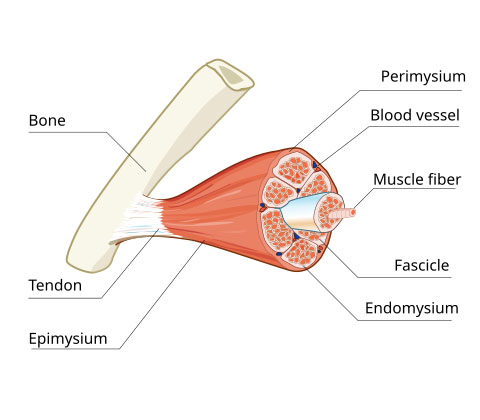
The muscle belly is composed of fascicles, which themselves contain between 20-80 muscle fibres (sometimes referred to as myocytes), each of which then contain thousands myofibrils.
Myofibrils are the contractile elements of the muscle, containing repeating units called sarcomeres. These will be briefly explored later in the article.
(Lim et al., 2021)
Connective tissue hold all these bundles together. There are three types:
Epimysium – surrounds the entire muscle. Perimysium – surrounds each fasicle (i.e. bundle of muscle fibres/myocytes). Endomysium – surrounds each individual muscle fibre.
(Hariadhi, 2024)
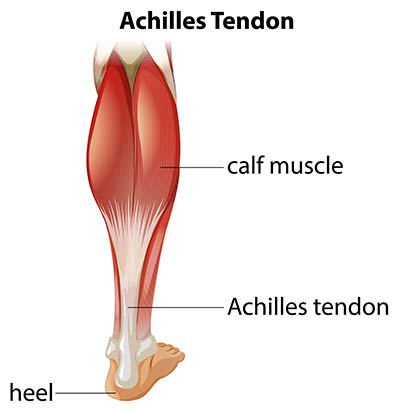
Tendons are on the end of our muscles. They act as the intermediary between muscle and bone. Muscle connects to tendons via the myotendinous junction (MTJ), which itself forms part of the fairly complex myotendinous unit.
The MTJ is composed of tendon fibres and terminal muscle fibres which create finger like projections that increase the surface area between tendon and muscle. This increased surface area acts to disperse the energy of the contracting muscle, thereby decreasing focal stress. In laymans terms, it functions to ‘spread out the load’.
(BRGFX, 2014)
Proprioceptors
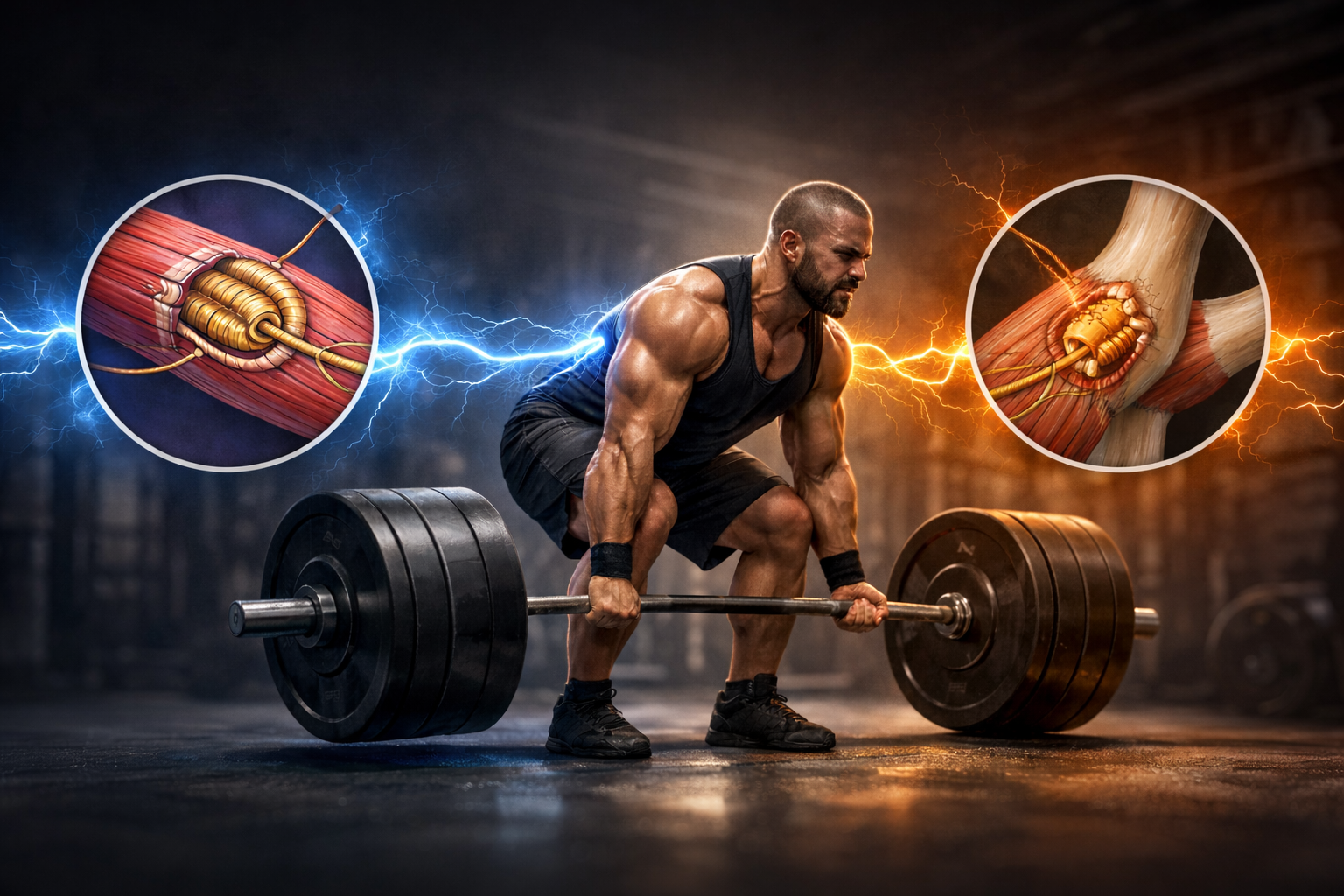
To understand why we shake during a deadlift, we first need to understand the structure and function of two neurological sensory receptors (aka. proprioceptors), which are located in our muscle and tendon fibres.
Muscle Spindles sense STRETCH and SPEED (VELOCITY). They are located in the muscle belly, running parallel to the muscle fibres. Their main role is in the action of the stretch reflex, which will be covered soon.
GTO’s sense muscle TENSION (FORCE). They are located within the myotendinous junction (MTJ).
*Note – you may see the term ‘enthesis’ used to describe connecting interfaces. Whilst serving a similar function to the MTJ, an enthesis is actually the bit that connects tendons and/or ligaments to bone, otherwise known as the tendon-to-bone interface (TBI for short). Both the MTJ and TBI are illustrated below.
(Bianchi et al., 2021)
Muscle Spindles
Extrafusal muscle fibres form the outer bulk of the muscle, contracting and generating skeletal movement. They have an origin and insertion point on our bones, and have a fusiform (spindle) shape to them, hence the name extrafusal.
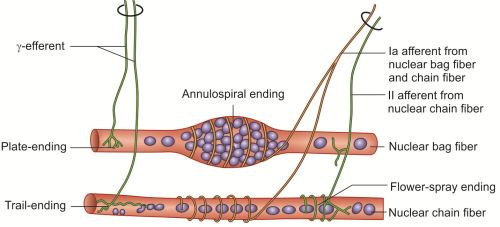
Intrafusal muscles fibres run parallel to the extrafusal muscle fibres. The sheath containing the fibres are also fusiform, hence the name intrafusal. They don’t share the same origin and insertion point that the extrafusal fibres. They are instead attached to the intramuscular connective tissue. Intrafusal muscle fibres, combined with their nerve supply, form the Muscle Spindle. See below.
Each end of the muscle spindle have contractile elements (actin and myosin) that form the crossbridges responsible for muscle contraction. This is the same mechanism responsible for contraction in extrafusal muscle fibres (aka. the sliding filament theory).
The centre of the muscle spindles however contain little to no contractile elements, instead it contains the nuclei of the muscle fibre which serve as the sensory unit of the spindle. There are two types of intrafusal fibres based on whether the nuclei are concentrated in a wide central portion (Nuclear Bag Fibres), or if they are aligned in a chain (Nuclear Chain Fibres).
(Pramanik, 2015)
There are then two types of sensory (or afferent) nerve fibres that wrap around the spindle and are stimulated by the stretching of the mid-portion (i.e. the centre) of the muscle fibre:
Primary (Type Ia) fibres wrap around both Nuclear Bag and Nuclear Chain Fibres, and are considered to transmit information regarding velocity AND muscle length.
Secondary (Type II) fibres innervate one or both sides of the Nuclear Chain Fibres, and these are considered to only sense muscle length.
The stretching effect can occur either as a result of the lengthening of the extrafusal muscle fibres, OR contraction of only the muscle spindle end portions (i.e. the portions with actin and myosin).
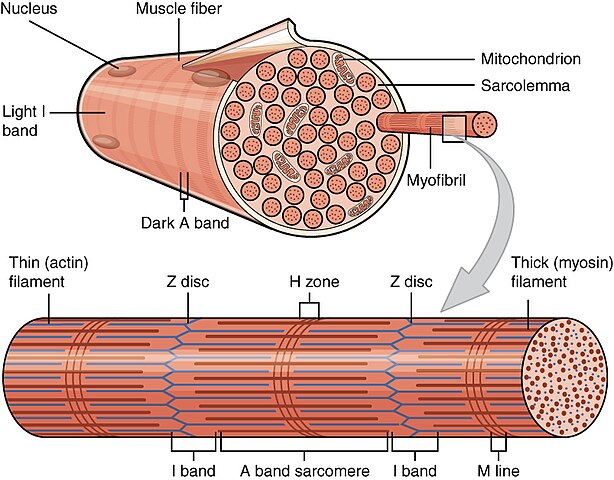
Now we may go into how contraction of muscle fibres occur (aka. the sliding filament theory) in a further article. For now, just remember that a single muscle fibre contains lots of tube like structures called myofibrils (see below).
(OpenStax, 2024)
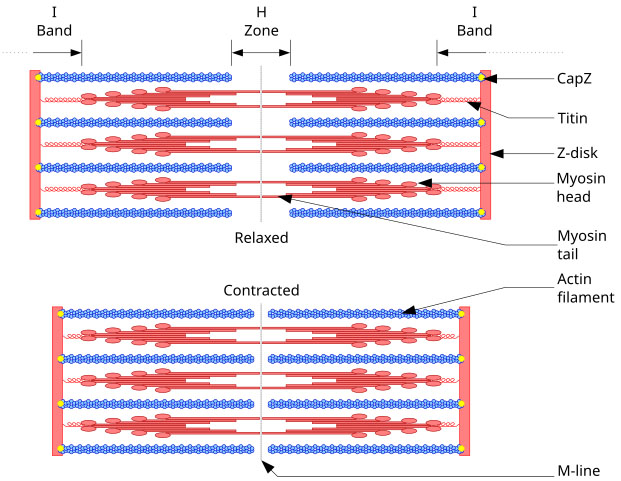
These myofibrils contain actin and myosin protein filaments, which form crossbridges with each other and ‘slide’ back and forth along the length of the myofibril – resulting in muscle contraction.
Titin (another protein filament) is also present in a myofbril, however this is considered to be an elastic protein rather than a contractile one. It functions as a molecular spring that is responsible for the passive elasticity of muscle. This can be seen in the image below.
(Richfield, 2007)
As can be seen in the image by Pramanik, intrafusal muscle fibre ends are innervated by efferent nerve fibres (Gamma Motor Neurons to be precise) because they are contractile.
Extrafusal muscle fibres are also innervated by efferent nerve fibres, but these are Alpha Motor Neurons.
This distinction is worthy of note because it means that the contractile elements of the intrafusal muscle fibres receive seperate motor innervation. Which is perhaps a topic for another day!
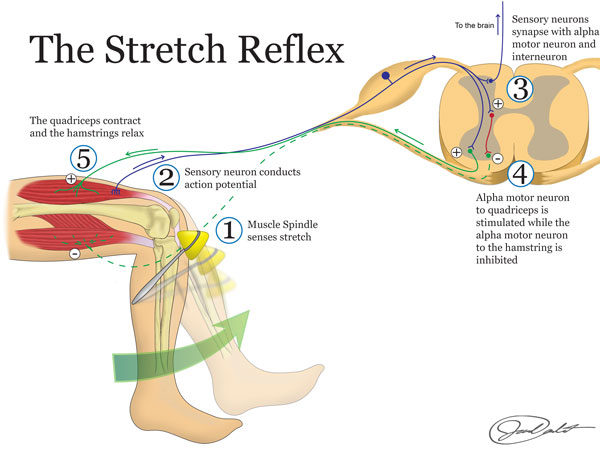
The Stretch Reflex
The primary purpose of the stretch reflex is to oppose sudden changes in the length of the muscle. It does this to protect the muscle from potential damage as a result of sudden overstretching.
When the centre of the muscle spindle senses a sudden stretch, the afferent nerves (mainly the Primary Type Ia fibres) send this information straight to the dorsal column of the spinal cord.
This provides the shortest path of travel for the action potential to then synapse with an alpha motor neuron of the same muscle (remember, alpha motor neurons innervate the larger extrafusal muscle fibres).
Also remember that the centre of the muscle spindle (containing all of the sensory neurons) was initially excited by the change in length of the extrafusal muscle fibre.
The firing rate of the sensory nerves in the muscle spindle is dependent on the length, and speed of change in length, of the muscle fibre. Simply put, they sense if a stretch is TOO FAST and/or TOO FAR.
If the stretch is determined to be too fast or too far, then the alpha motor neurons fire action potentials down into the extrafusal muscle fibres, telling them to contract to prevent injury.
The opposite is true when there is no stretch applied to the muscle spindles, i.e. the extrafusal muscle fibres relax.
The stretch reflex is completely autonomous from the brain, as there are no higher cortical functions involved in this process.
(Winter, 2015)
Reciprocal Inhibition
We can see from the image above that in addition to the muscle spindle sending messages through to the motor nerve of the same muscle telling it to contract, it also branches off to synapse with an inhibitory interneuron which releases inhibitory neurotransmitters that decrease the excitation of the motor neurons to the antagonistic (or opposite) muscle, relaxing it.
That is to say that in the example above, when the quadriceps contract in response to muscle spindle activation, the hamstring will relax allowing the reflexive movement to occur without resistance from the hamstring.
*Geeky Side Note 1* Monosynaptic & Polysynaptic Reflexes
Reflex arcs can be classed as monosynaptic (i.e one synapse), or polysynaptic (i.e. two or more synapses).
The stretch reflex is classed as monosynaptic. That is an efferent (sensory) neuron synapsing with an afferent (motor) neuron.
However reciprocal inhibition involves polysynaptic reflexes due to the addition of the interneuron that inhibits (relaxes) the antagonistic muscle.
That is to say that in the simplest form, the patella reflex (seen by tapping the tendon of the quadriceps) elicits the mono synaptic stretch reflex response, contracting the quadricep in response to the stretch. However, the reciprocal inhibition that causes the hamstring to simultaneously relax is considered to be polysynaptic.
i.e – the inhibitory interneuron involved in reciprocal inhibition receives the same action potentials from the initial efferent (sensory Type Ia fibres) in the stretch reflex, then it transmits inhibitory signals to the antagonistic muscle (the hamstring) via alpha motor neurons, so that it relaxes allowing the quadriceps to contract without resistance of hamstrings.
N.B. Interneurons can distribute signals segmentally throughout the spinal cord. They be either inhibitory, OR excitatory.
*Geeky Side Note 2* Consciously Overriding the Stretch Reflex
Due to the presence of interneurons, the central nervous system (the brain) can consciously inhibit the stretch reflex.
This is because voluntary upper motor neurons can travel to the spinal level involved in the stretch reflex response and stimulate or inhibit the lower motor neuron via the interneurons.
So in the patella reflex, we can tell our leg to kick out or stay put. This however, would then not be a true reflex as it is not involuntary.
*Geeky Side Note 3* Using the Stretch Reflex to Identify an Upper Motor Neuron Lesion
As physios we can leverage reciprocal inhibition and use it to our advantage when it comes to identifying the presence of an upper motor neuron lesion.
We can use the Babinski reflex as an example. Here, we scrape across the sole of the foot, starting from the outside of the heel through to the base of the first metatarsal. In a developed pyramidal tract we expect to see the toes flex downwards, because this demonstrates inhibition of the toe extensors.
If we don’t see reciprocal inhibition of the toe extensors (that is to say, we see the great toe curl up, with or without the others fanning out), then we record a positive Babinski sign and we can deduce that either:
An upper motor lesion exists somewhere along the pyramidal tract that is compromising the inhibitory action potentials (nerve signals) at vertebral level of the reflex.
The pyramidal system is underdeveloped, as is seen in that of babies.
Golgi Tendon Organs (GTO’s)
You may remember from the moment arms in powerlifting article that force = mass x acceleration. A force can cause an object to accelerate, decelerate, deform, or rotate. Force is a vector quantity, meaning it has both magnitude (i.e. distance) and a direction of travel.
Common types of force include: Frictional Force, Gravitational Force, Spring Force, Normal Force, Magnetic Force, Electrical Force, Air Resistance Force, Applied Force and Tension Force.
Tension is defined as the force transmitted transmitted axially along an object when pulled by forces acting from opposite sides. It is the opposite of compression.
In our case, we can see that the forces acting from opposing sides are the contractile forces from one end of the muscle to the other – thus creating tension in the tendon.
GTO Function
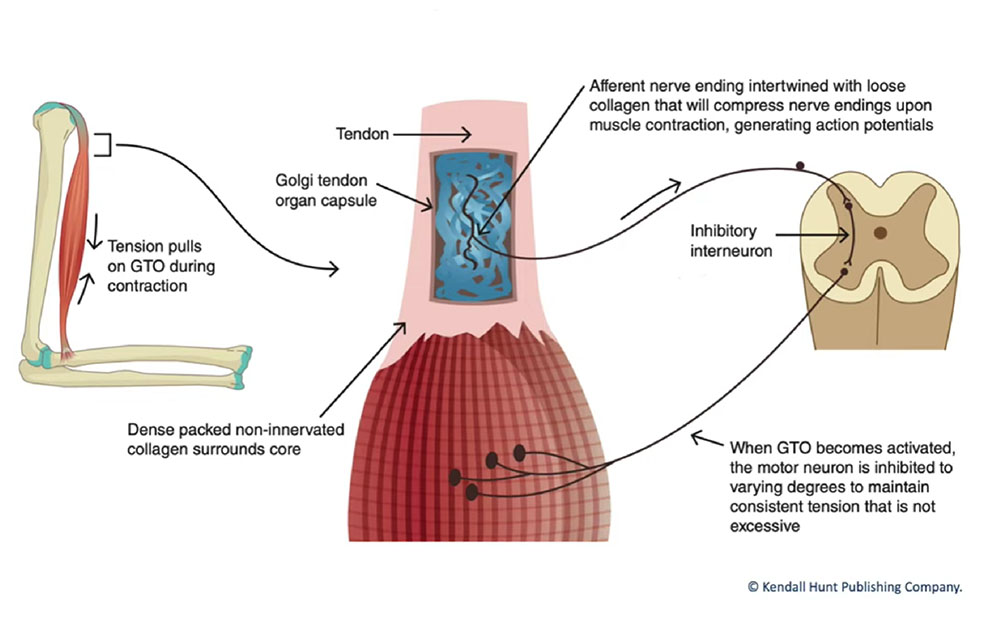
GTO’s sense this tension force within a tendon. They are responsible for autogenic inhibition (also referred to as the inverse myotatic reflex or the golgi tendon reflex). This is a protective reflex, utilising a negative feedback loop, that prevents muscles from exerting more force than their tendons and bones can handle.
Structurally GTO’s are encapsulated bundles of collagen that are innervated by Type Ib afferent motor fibres, which are thinner and transmit signals faster than the Type Ia fibres found in the muscle spindle. These fibres are activated when the tendon is subjected to high levels of force, where they subsequently inhibit muscle activity to prevent injury.
The function of the GTO can therefore be considered the opposite of the muscle spindle, which serves to produce muscle contraction.
So, try to stick with me now! Here we go…
GTO’s detect the degree of tension in the tendon that is generated by muscle contraction, with the purpose of preventing tendon avulsion.
Whenever GTO’s are stimulated by tension, they activate type Ib sensory fibres which send that information (via action potentials) into the Central Nervous System (CNS).
Type Ib fibres travel to the CNS via the dorsal root ganglion (DRG), then move into the dorsal horn of the spinal cord – where they then have two options because it then bifurcates (or splits).
When it does this, it synapses on two different interneurons. See below:
(Winter, 2015)
One interneuron is inhibitory, which connects with an alpha motor neuron that travels to the extrafusal muscle fibres of the agonist.
The other interneuron is an excitatory (or stimulatory) interneuron, that connects with an alpha motor neuron that travels to the extrafusal muscle fibres of the antagonist (or opposite) muscle.
*Note – Motor Neuron’s reside in the anterior (or ventral) horn of the spinal cord, whereas Sensory Neurons reside in the posterior (or dorsal) horn of the spinal cord. You can see an example of this in the image above.
We can put all of this into context by using the bicep curl as an example. Imagine curling 200kg (i.e. a very heavy weight).
If the bicep is contracting so much that it’s at risk of pulling the tendon off the bone (an avulsion fracture) – do you want the bicep to keep contracting? No, you definitely don’t!
You want the muscle to do the opposite of contract – you want it to relax. That is to say, you want inhibition of the muscle.
So, in the autogenic inhibition reflex (i.e. the golgi tendon reflex/inverse myotatic reflex) – the nerve signals, generated by tension on the Golgi tendon organ residing in the bicep tendon, travel across the type Ib sensory fibres to the CNS via the DRG, into the dorsal horn of the spinal cord, THEN the signals pass through to the inhibitory interneuron.
This synapses with an alpha motor neuron that travels to the muscle (in our case, the bicep), and sends messages to the bicep telling it to relax – thus taking tension off the bicep tendon, thereby decreasing the risk of an avulsion fracture. See below:
Now whenever we shorten and relax a muscle, we need the antagonist muscle to contract to pull the joint in the opposite direction to aid in taking tension off the tendon.
In the example above, the antagonist is the tricep as this extends the elbow. You can see the bifurcation of the Type Ib fibres in this image, however they are referring to the hamstring as the antagonist as the example on display is knee extension (not bicep flexion).
So, autogenic inhibition can lead to inhibition of the contracting muscle AND stimulation of the antagonistic muscle.
Interneuron Function
You might then ask, HOW do the interneurons act as inhibitory or excitatory? Well…
We’ll do a deepish dive into nerve conduction in a future article. But for now, the answer is that it all depends on the type of neurotransmitters that are released in the synapse.
The neurotransmitter that’s released from the inhibitory neuron tends to be glycine. Glycine generates inhibitory post synaptic potentials, or I.P.S.P’s for short. This means they cause negative ions to rush in, or positive ions to rush out of the cell – making the inside of the cell very negative (thus, hyper polarising it).
The neurotransmitter that’s released from the stimulatory interneuron tends to be glutamate. Glutamate generates excitatory post synaptic potentials, or E.P.S.P’s for short. This means they cause cations (positively charged ions) to flow into the cell, depolarising it which leads to action potentials.
So, Why Do My Legs Shake When I Pull A Heavy Deadlift?
Whoa! That was a deep-ish dive into the stretch reflex and the golgi tendon reflex.
But hopefully we now understand the two statements below. We can then apply these to the deadlift:
The stretch reflex, combined with reciprocal inhibition serves to protect a muscle from potential damage by sensing the length of stretch on the muscle, and the speed at which that stretch occurs. If the muscle spindles determine the stretch to be too long or too fast, they send excitatory signals to the agonist muscle telling it to contract – thus protecting the muscle from overstretching. Simultaneously, signals pass through to the antagonist muscle telling it to relax so that the agonist doesn’t have to produce more force to overcome any muscular contraction of the antagonist.1
The Golgi tendon organ senses tension in the tendon of the agonist muscle. If this is determined to be too high (risking tendon avulsion), inhibitory signals are sent through to the agonist telling the extrafusal muscle fibres to relax. Simultaneously, motor signals are sent through to the antagonist telling it to contract, in an attempt to further reduce tension on the tendon of the agonist.
The DEADLIFT
The deadlift is generally considered to have three phases:
Lift off – this is when the force is applied to the bar to pull it off the floor. Mid pull – this is when the bar is located immediately above the knees Lock out – this is when the trunk reaches the vertical position with the bar positioned at its highest point.
LIFT-OFF
Hamstrings
The hamstrings, particularly biceps femoris (BF), have been shown to exhibit less activation in the lift-off position compared to mid pull and lock out.
It is proposed that this is because the BF is in an unfavourable position due to the length-tension relationship, especially in relation to the hip joint when the knee and hip joint are more flexed and the BF more elongated.1
Quadriceps
Load on the quadriceps, particularly rectus femoris (RF) has been shown to be at its greatest during the lift off phase, and at its lowest during the mid pull phase.
This is said to occur because the smaller angle of the knee and hip during lift off would request higher demand of the RF, while the hamstrings act as knee stabilisers. The RF muscle is also a hip flexor and would only need to act on the knee joint in this position too.1
MID-PULL
Hamstrings + Quadriceps
Load on the hamstrings, particularly the BF, is at its highest during mid pull. The increased activation is said to be the result of a position in which BF is acting as a hip extensor at an optimal angle.
Additionally, the amplitude of the knee in this position is closer to maximum extension than the hip joint, generating a higher possibility of tension in BF as the hip reaches maximum extension. The maximum torque in isometric hip extensions is higher when BF is in a position more elongated by knee extension, which corresponds to the mid-pull position.1
SHAKING IN THE DEADLIFT THEORY
Yes – that is all the following is. A theory.
This is because I can find no empirical data that provides clear reasoning as to what mechanism is at play to cause the shaking in the deadlift. If any readers can find such evidence – PLEASEget in touch.
I am simply pulling together data from academia, known principles such as reciprocal and autogenic inhibition, and my own anecdotal evidence of over 20 years deadlifting to draw a reasonably informed conclusion as to what is likely happening. Hence, I MIGHT BE WRONG!
Clonus
Now before I put forward my theory, I will say that I’ve heard many a bro-scientist refer to the shaking/jerkiness as clonus. I humbly disagree. This is why…
Clonus is an abnormal reflex response that involves involuntary and rhythmic muscle contractions. It is often accompanied by hyperreflexia and is indicative of an upper motor neuron lesion, much like the Babinski sign.
Although clonus may visually appear identical to the shakiness/jerkiness that can occur in a max effort deadlift, the underlying cause of such actions are not.
In literature, there are currently two theories that try to explain the underlying mechanisms behind clonus:
It’s a self-perpetuating reactivation of peripheral muscle stretch circuits, with each beat producing the next.
There’s an initial appropriate external stimulus that leads to activation of the stretch reflex circuit, followed by a central signal which commands the muscles to continue to produce that motor response in the absence of an appropriate stimulation of the stretch reflex.2
Hyperexcitability in muscle stretch circuits is produced when there is less tonic inhibition of motor neurons involved in the monosynaptic stretch reflex. Think back to those good old monosynaptic and polysynaptic reflexes. For further reading on the difference between tonic and phasic inhibition, I would suggest exploring this article.
In short, tonic firing refers to a sustained response, which activates during the course of the stimulus. Phasic firing refers to a transient response with one or few action potentials at the onset of stimulus followed by accommodation.3
Hyperexcitability can occur when there is a lesion to descending motor nerves, predominantly the dorsal reticulospinal pathway, which can occur anywhere from the cortex to the spinal cord.
The inhibitory dampening effect of these descending nerves on alpha and gamma motor neurons is removed, leading to a hyper excitatory state in the muscle stretch reflex circuit.
Clonus is therefore considered to be a manifestation of an upper motor neuron pathology, which explains why other signs of hyperreflexia generally accompany it.2
SHAKING IN THE DEADLIFT
I’ve hopefully convinced you now that if you shake during a deadlift, it doesn’t mean you have an upper motor neuron lesion.
Proposed mechanism of the deadlift tremor:
I think this can most definitely (dude), be attributed to either the stretch reflex or Golgi tendon reflex – or potentially both. Below, I propose this to mostly be the result of a battle of the Golgi tendon organs.
Theory:
We know that shaking occurs mostly during mid pull. We have also ascertained that tension on the hamstring tendons are at their highest during the mid pull phase, and tension on the quadriceps are at their lowest during mid phase.1
At max effort (RPE 11!), this tension could cause the Golgi tendon reflex to inhibit muscle activity to the hamstring, thus preventing an avulsion fracture, whilst simultaneously firing motor signals to the antagonist (the quadriceps) telling it to activate and shorten, thus reducing further tension on the hamstring tendons.
This results in increased tension on the quadriceps/patella tendon. This would similarly then result in the Golgi tendon reflex in the quad/patella tendon sensing all that tension and inhibiting quadricep activation in an attempt to prevent an avulsion fracture. Simultaneously, the reflex arc would stimulate muscular contraction of the hamstrings to further reduce tension off the quadricep/patella tendon.
What follows is a battle of the Golgi tendon reflex in both the hamstrings and quadriceps, which would likely present as shaky/jerkiness in the legs, reducing at lock out once tension on the tendons has somewhat decreased.
DISCUSSION
I’m going do that thing that every student at university does when writing a research article… I propose that further research needs to be undertaken if we are to fully understand the physiology behind why we shake during a deadlift.
Most studies out there don’t appear to test the gluteus maximus (GM) during a conventional deadlift. I think the addition of monitoring muscular activity in the GM, AND the semi-tendinosis (ST) and semi-membranosus (SM), during each portion of the deadlift could help ascertain whether the addition of the GM in terminal hip extension has a role to play with the cessation of the shaking, and/or reduction of tension on hamstring tendons.
If it was proved that the GM takes over the primary role of hip extension in this phase, this could provide further reasoning as to why the shaking stops at lock out. This theory would however be compromised if hamstring and quadriceps activity were, as per previous studies1, to show no change (i.e. no drop) in electromyographic (EMG) activity towards lock out.
EMG
Furthermore, I recognise that surface EMG testing has limitations in this context. Mainly because when a joint angle changes (thus changing the muscle fibre length), the diameter of the muscle fibre changes because muscle volume is practically a constant (n.b. – volumetric strain-energy potential has been shown to reduce muscle volume by 2–4% during contraction of fully active parallel muscle fibres6). Though for all intents and purpose, the volume remains relatively constant throughout. Due to the change in changing geometry of the muscle being monitored, it makes it difficult to accurately monitor the recruitment pattern among changing joint angles.
To aid in visualising this, imagine you were happily minding your own business monitoring the flow of oxygen atoms in a slippery water snake toy, then someone comes along and squeezes the slippery snake, pushing all of the water (hence, oxygen atoms) up and off the sensor! This would compromise the accuracy of your results.
Okay, maybe there’s a better example out there. But hopefully you get the point 😊
Intramuscular EMG may therefore provide more accurate results, however this would likely be too invasive for the participant and highly challenging for the assessor. Nonetheless, it remains an option.
MONITOR MORE MUSCLES
Furthermore, in the majority of studies referenced, only one single hamstring muscle has been monitored. This has its limitations in terms of being able to draw accurate conclusions on what occurs in all three hamstrings during knee flexion/extension and hip flexion/extension.
To elaborate, the semi-tendinosis (ST) and semi-membranosus (SM) have more distal attachments compared to the long and short the of the BF. This suggests that the ST and SM have more advantageous moment arms for production of force in knee flexion, compared to that of the BF.7
Due to the above, there may actually be functional differences among individual hamstring muscles in hip extension and knee flexion. This means that monitoring just one hamstring has it’s limitations in terms of accuracy.
MUSCLE GEOMETRY
Lastly, in order to fully understand the tension forces acting upon each muscle during the deadlift, there should be recognition of muscle architecture of each individual muscle being tested and the effect that has on the force-velocity relationship. That is to say that fusiform muscle has been found to be more effective in muscle contraction velocity, whereas pennate muscle has been found to be better in muscle force generation.
Wilson, 2014
This fact is likely due to fusiform muscles allowing a greater range of motion – and we know that fibre length is an important determinant of the quantity of contraction possible in a muscle.
Pennate muscle fibres however are diagonally orientated, which maximizes the muscle’s force potential. Additionally, more muscle fibres fit into the muscle compared with a similarly sized fusiform muscle.5
We know that all four hamstrings are fusiform, with varying degrees of fibre length and physiological cross sectional areas. The quadriceps are however considered to be bipennate.8 Could this geometry have a role in the distribution of tension forces during each phase of the deadlift? Probably! But all this thinking is starting to make my head hurt, so I’m ending it here 🙂
CONCLUSION
As you can see, and as with most studies – method of testing, accuracy of testing (i.e. inter and intra-rater reliability), and subtle differences in participant anthropometry can all affect the results. Ideally, we could throw billions at this and produce the most accurate results ever, meaning that we could draw definitive conclusions as to what exactly occurs when we shake during a deadlift.
… But ain’t nobody gonna do dat!
I therefore propose that muscular tension in each tendon of SM, ST, BF, RF and GM, gastrocnemius and erector spinae should be monitored throughout each portion of the lift using electrical impedance, as this has been found to be a good measure of tendon tension.4
FINAL THOUGHTS
Urgh, I’m not an academic and now my head REALLY hurts. I think someone far more intelligent than me can now take the reins on this one 🙂
At the end of the day, does anyone really care?! Let’s just embrace the shake, and lift some heavy ass weight!
I’m off to get a beer, or two 🍻
If you have any comments, compliments or complaints, please write them below.
Oh, and if you need a bar to deadlift with… you can help the site by purchasing one here.
References
IMAGES
Lim, HoTae & Choi, In & Hyun, Sang hwan & Kim, Hyesoo & Lee, Gabsang. (2021). Approaches to characterize the transcriptional trajectory of human myogenesis. Cellular and Molecular Life Sciences. 78. 1-14. 10.1007/s00018-021-03782-1.
Hariadhi. (2024) Skeletal Muscle. Available at: https://commons.wikimedia.org/wiki/File:Skeletal_muscle_svg_hariadhi.svg
BRGFX. (2014) Achilles Tendon. Available at: https://www.freepik.com/free-vector/medical-infographic-achilles-tendon_11253877.htm
Bianchi, E., Ruggeri, M., Rossi, S., Vigani, B., Miele, D., Bonferoni, M. C., Sandri, G., & Ferrari, F. (2021). Innovative Strategies in Tendon Tissue Engineering. Pharmaceutics, 13(1), 89. https://doi.org/10.3390/pharmaceutics13010089
Pramanik, D. (2015). Principles of Physiology. 5th edn. (no place):Jaypee Brothers Medical Publishers
OpenStax. (2015) Organization of Muscle Fiber. Available at: https://commons.wikimedia.org/wiki/File:1002_Organization_of_Muscle_Fiber.jpg
Richfield, D. (2007). Sarcomere. Available at: https://commons.wikimedia.org/w/index.php?curid=2264027
Winter, J.C. (2015). The Stretch Reflex. Available at: https://content.byui.edu/file/a236934c-3c60-4fe9-90aa-d343b3e3a640/1/module9/readings/somatic_reflexes.html
Winter, J.C. (2015). The Golgi Tendon Reflex. Available at: https://content.byui.edu/file/a236934c-3c60-4fe9-90aa-d343b3e3a640/1/module9/readings/somatic_reflexes.html
Wilson, P. (2014). Anatomy of Muscle. (no place):Elsevier
ARTICLES
Moreira, V.M., Lima, L.C.R.d., Mortatti, A.L., Souza, T.M.F.d., Lima, F.V., Oliveira, S.F.M., Cabido, C.E.T., Aidar, F.J., Costa, M.d.C., Pires, T., et al. (2023) Analysis of Muscle Strength and Electromyographic Activity during Different Deadlift Positions. Muscles, 2(2):218-227. Available at: https://doi.org/10.3390/muscles2020016
Zimmerman, B., Hubbard, J.B. Clonus. ( 2023) Treasure Island (FL): StatPearls Publishing. Available at: https://www.ncbi.nlm.nih.gov/books/NBK534862/
Wang, L., Liang, P. J., Zhang, P. M., & Qiu, Y. H. (2014). Ionic mechanisms underlying tonic and phasic firing behaviors in retinal ganglion cells: a model study. Channels (Austin, Tex.), 8(4), 298–307. Available at: https://www.ncbi.nlm.nih.gov/pmc/articles/PMC4203731/
Suganuma, J., & Nakamura, S. (2004). Measurement of tension of tendon tissue based on electrical impedance. Journal of orthopaedic science : official journal of the Japanese Orthopaedic Association, 9(3), 302–309. Avaiable at: https://doi.org/10.1007/s00776-004-0782-7
Yanagisawa, O., & Fukutani, A. (2020). Muscle Recruitment Pattern of the Hamstring Muscles in Hip Extension and Knee Flexion Exercises. Journal of Human Kinetics, 72, 51–59. Available at: https://doi.org/10.2478/hukin-2019-0124
Ryan, D.S., Domínguez, S., Ross, S.A., Nigam, N., Wakeling, J.M. (2020). The Energy of Muscle Contraction. II. Transverse Compression and Work. Frontiers in Physiology. Available at: https://www.frontiersin.org/journals/physiology/articles/10.3389/fphys.2020.538522/full
Herzog, W., Read, L.J. (1993). Lines of action and moment arms of the major force-carrying structures crossing the human knee joint. Journal of Anatomy. Available at: https://www.ncbi.nlm.nih.gov/pmc/articles/PMC1259832/
Takeda, K., Kato, K., Ichimura, K. & Sakai, T. (2023) Unique morphological architecture of the hamstring muscles and its functional relevance revealed by analysis of isolated muscle specimens and quantification of structural parameters. Journal of Anatomy, 243, 284–296. Available at: https://doi.org/10.1111/joa.13860
When not writing for FGUK, Tim works as a Physiotherapist, Personal Trainer and is a Retired British Army Ammunition Technician.
In his spare time Tim enjoys engaging in a whole variety of sports, spending considerable time with his little rascal of a dog, relaxing with his friends and family, but most of all.. geeking out on all things fitness!
Support FGUK
It’s time to pay the bills and send the shameless plugs!
If you would like to help fund the ongoing running costs of the site, then you can!